Polypropylene Carpet Stain Removal: Why Some Stains Just Won’t Budge

There is a particular kind of buyer’s confidence that settles over people when they choose a polypropylene carpet. The salesperson has mentioned the words “stain resistant” at least twice, possibly three times. The brochure backs this up with language about “advanced fibre technology” and reassuring stock photography of laughing families apparently unconcerned by the large glass of orange juice tipping toward their immaculate floor. The carpet goes down. Life resumes. And then, some unremarkable Tuesday, someone tracks in a small amount of cooking grease from the kitchen, or knocks over a bottle of sun cream, and discovers that their supposedly indestructible carpet has acquired a stain that no amount of scrubbing, spraying, or optimism is going to shift.

Polypropylene – also sold under the name olefin – is the most widely fitted carpet fibre in the United Kingdom, and for good reason. It is affordable, reasonably durable, and genuinely resistant to a wide range of everyday spills. But it has an Achilles heel that the brochure tends to mention rather quietly, if at all, and understanding it is the difference between managing this carpet successfully and spending years in a state of low-level bewilderment at its behaviour.


The Polypropylene Paradox – Stain Resistant Does Not Mean Stain Proof

The “stain resistant” claim is not dishonest – it is just incomplete. Polypropylene fibres are hydrophobic, meaning they actively repel water. This is genuinely useful. Coffee, tea, fruit juice, wine, and most water-based household spills bead on the surface of polypropylene rather than being absorbed into the fibre structure. Blot them up promptly and they tend to come away cleanly, leaving little or no residue. In this respect, polypropylene really does outperform wool or nylon, and the marketing is not entirely misleading.

The problem arrives with the other category of stains – the oily, greasy, waxy ones – because polypropylene fibres are not merely non-repellent toward oil. They are actively attractive to it. The same chemical properties that cause polypropylene to shed water cause it to embrace oil, and once an oil-based substance has bonded with the fibre, it has, in a very real sense, found its natural habitat. Removing it is not a cleaning challenge. It is closer to a chemistry problem.

What “Solution-Dyed” Actually Means (And Why It Matters)

One genuinely useful feature of polypropylene carpet that is worth understanding is that it is solution-dyed – meaning the colour is added to the liquid polymer before the fibre is extruded, rather than applied to the surface afterward. The practical upshot is that bleach will not strip the colour, because the colour is not on the surface to strip. This gives polypropylene a notable advantage when dealing with certain stains: you can use diluted bleach solutions on it without the fear of creating a more expensive problem than the one you started with. It also means the dye will not bleed when wet, which removes one of the anxieties that attends stain removal on wool or mixed-fibre carpets. Useful to know – though it does nothing whatsoever about the grease problem.


The Science of Why Polypropylene Loves Oil

Polypropylene is what chemists call a non-polar material. Without going further into GCSE chemistry than is strictly necessary, non-polar materials interact preferentially with other non-polar substances – which is to say, with oils, greases, and waxes. Water is polar. Oil is non-polar. This is fundamentally why water and oil do not mix – and it is also why polypropylene carpet, which is essentially a non-polar surface at the molecular level, sheds water while absorbing oil.

When an oil-based substance contacts polypropylene fibre, it does not simply sit on the surface waiting to be removed. It is drawn into the structure of the fibre itself, dispersing through it at a molecular level. Standard water-based cleaning products have no mechanism for removing it, because water and oil will simply not interact. The stain is not just on the carpet. In a meaningful chemical sense, it is part of it.

Oleophilic Fibres and the Stains That Bond for Life

The practical consequence of this is a predictable hit list of stains that polypropylene carpet owners come to know and dread. Cooking oil and animal fat are the most common culprits – a splash from the frying pan carried on the sole of a sock, a drip from a takeaway container, a butter smear from an enthusiastic piece of toast. But the category extends further than most people realise. Many cosmetics and skincare products – moisturiser, foundation, sun cream, hair serum – are oil-based and will bond with polypropylene in exactly the same way. Furniture polish, shoe polish, and certain aerosol products are equally problematic. So, rather notoriously, is WD-40, which people occasionally deploy on their carpets in the mistaken belief that it loosens other stains. It does not. What it does is introduce an oil-based compound that will then require its own specialist removal.


The Stains That Polypropylene Laughs Off

In the spirit of balance, it is worth being clear about what polypropylene does well. Water-based spills – wine, fruit juice, fizzy drinks, tea, coffee, most food sauces – are where polypropylene earns its “stain resistant” billing. Because the fibre repels water, these spills tend to remain on the surface long enough for prompt action to be genuinely effective. A clean white cloth, cold water, a small amount of washing-up liquid solution, and correct blotting technique will address the majority of water-based spills on polypropylene with minimal drama. Mud, once allowed to dry fully before treatment, also responds well – a common counterintuitive truth that applies to most carpet types.

Water-Based Spills and Why They’re Usually Fine

The key qualifier is speed. Polypropylene’s hydrophobic properties give you a slightly longer window than you would have with an absorbent fibre like wool, but that window is not infinite. Left long enough, even water-based spills will eventually work their way into the backing and underlay, at which point the problem becomes considerably more complicated. The carpet’s resistance to water absorption is a feature, not an excuse for procrastination.


Heat – The Other Enemy Nobody Warns You About

Polypropylene has a melting point that is low relative to other carpet fibres – somewhere in the region of 160 degrees Celsius, which sounds more than sufficient until you consider that steam cleaners routinely operate above this temperature. This is a point that catches people out with some regularity. The instinct when facing a stubborn stain is to escalate – more heat, more pressure, more aggression. On polypropylene, this instinct is actively dangerous. High heat can permanently distort, matt, or even partially melt the fibre tips, and no amount of subsequent cleaning will restore them. The stain you were trying to remove may well be replaced by a patch of crushed, discoloured fibre that looks considerably worse.

Why Your Cleaning Method Might Be Doing More Damage Than the Stain

Steam cleaners on polypropylene should be used with significant caution and at the lowest possible temperature setting – ideally not at all on older or lower-grade polypropylene. Rotary scrubbing machines are similarly risky, both for heat generation and for the mechanical distortion they can cause to the pile. The correct technique for polypropylene is always low-temperature, low-aggression, and high-patience.


The Right Approach – What Actually Works on Polypropylene

For oil-based stains, the answer lies in fighting non-polar with non-polar. Dry-cleaning solvents – available from good hardware and cleaning supply shops under various brand names – are non-polar solvents that can dissolve and lift oil-based compounds from polypropylene fibres in a way that water-based cleaners simply cannot. Apply a small amount to a clean white cloth, blot gently from the outer edge of the stain inward, and work in stages rather than attacking the whole area at once. The golden rule of not over-saturating the carpet applies here as firmly as anywhere else.

Dry-Cleaning Solvents and the Technique That Makes All the Difference

After the solvent treatment, a follow-up with a small amount of diluted washing-up liquid solution – applied sparingly and blotted, never scrubbed – helps remove any solvent residue from the fibre surface. Rinse with cold water applied via cloth, blot dry, and weight with clean towels to draw out residual moisture. For stubborn oily stains that have been sitting for some time, a small amount of bicarbonate of soda applied dry to the stain and left for twenty minutes before vacuuming can help absorb surface oil before the solvent treatment begins – the baking soda does useful preparatory work even if it cannot solve the problem on its own.

For the bleachable advantage mentioned earlier, a diluted solution of household bleach – roughly one part bleach to ten parts cold water – can be safely used on polypropylene for particularly tenacious stains, including some that have been partially set. Test in an inconspicuous area first regardless, because backing materials and underlay may react differently to the pile itself.


When the Stain Has Won

Some oil-based stains on polypropylene, particularly those that have been present for more than a day or two, or those that have been subjected to repeated unsuccessful cleaning attempts, have bonded with the fibre beyond the reach of any domestic treatment. This is not a failure of effort or technique – it is a property of the material, and it is the honest truth that the brochure with the laughing family opted not to include. A professional cleaner with access to stronger solvent formulations and hot water extraction equipment calibrated appropriately for polypropylene can sometimes recover stains that household methods cannot. Sometimes, though, the stain is simply there to stay – a permanent, mildly humbling reminder that “stain resistant” was always a description, not a promise.
Club Soda on Carpet Stains: Bartender’s Trick or Marketing Nonsense?

A dinner party is going well – perhaps rather too well. Someone’s elbow catches a glass of Merlot, there is that horrible suspended moment as it tips in slow motion, and before the host can even finish their sharp intake of breath, a confident guest is already striding toward the kitchen. “Have you got any club soda?” they ask, with the easy authority of someone who has seen this film before and knows exactly how it ends. The host scrabbles in a cupboard. The club soda is produced. It is applied. The guest nods sagely. Everyone breathes again. The stain, it turns out, is still very much there in the morning – but by then the party has moved on, and so has the myth.

Club soda’s reputation as a carpet stain remover is one of the most durable pieces of household folk wisdom in circulation. It appears in films, in sitcoms, in the unsolicited advice of well-meaning relatives, and in approximately half the “natural cleaning hacks” articles on the internet. It has the ring of insider knowledge – something professionals know that civilians don’t. The question worth asking, forty years into its cultural dominance, is whether any of it is actually true.

The honest answer is: a little bit, in specific circumstances, and far less than almost everyone believes.


The Curious Origins of a Very Persistent Myth

The club soda legend almost certainly originated in the hospitality industry, and that origin is important context that tends to get lost in translation. Bartenders, waitstaff, and front-of-house professionals have been reaching for soda water for decades when something gets spilled – and in that environment, it genuinely does something useful. But the conditions of a bar or restaurant are not the conditions of your living room carpet, and conflating the two is where the myth quietly falls apart.

A belief that gets repeated confidently enough, in enough different contexts, eventually acquires the unearned status of established fact. Club soda for stains sits comfortably alongside other beloved household wisdoms – bread on a burn, butter on chewing gum, raw steak on a black eye – in the category of advice that feels authoritative precisely because it has been passed down rather than tested.

Why Bartenders Swear By It (And Why That Context Matters)

In a bar, club soda is applied within seconds of a spill, onto a surface that is typically a cotton tablecloth, a polyester apron, or a rubber bar mat – none of which are carpet. The stain is fresh, the surface is relatively resistant, and the person applying the soda is doing so immediately and with reasonable technique. Under those conditions, almost any cold liquid applied promptly and blotted correctly will produce a decent result. The soda is doing some work. The speed and the method are doing considerably more. When the same advice gets carried home and applied to a Merlot stain that has been sitting in a wool carpet for twenty minutes while someone hunted through the recycling for a forgotten can of San Pellegrino, the results are predictably underwhelming.


What Is Actually Inside a Can of Club Soda

This is where we invite chemistry to the table, because the case for or against club soda ultimately rests on what is in it. Club soda is carbonated water with a small quantity of added minerals – typically sodium bicarbonate, sodium citrate, and occasionally potassium sulphate, depending on the brand. That is the complete list. There are no surfactants, which are the compounds that actually break the bond between a staining molecule and a fibre. There are no solvents, no enzymes, no oxidising agents. It is, at its core, fizzy water with a pinch of bicarbonate.

Each of those components can be examined for its theoretical stain-fighting credentials. Sodium bicarbonate has mild alkaline properties and is a legitimate cleaning agent in other contexts – it features in plenty of professional cleaning preparations. But dissolved in water at the concentrations found in a can of club soda, it is not present in sufficient quantity to do meaningful chemical work on a stain. The minerals are there for taste and mouthfeel, not for your carpet.

The Carbonation Argument – Fizz, Lift, and the Limits of Both

The strongest scientific case for club soda rests on its carbonation, and it is a case worth taking seriously – within limits. The effervescent action of carbon dioxide bubbles does create a genuine physical agitation at the fibre level. On a very fresh liquid stain, this can help bring the staining substance toward the surface of the pile rather than allowing it to settle deeper into the fibres. That is real, measurable, and not nothing.

The problem is that the effect is modest and extremely short-lived. The carbonation dissipates within seconds of contact. The bubbles are not interacting chemically with the staining compound – they are not breaking it down, not lifting it away from the fibre molecule by molecule the way a surfactant does. They are creating a brief mechanical agitation that assists with initial lifting. On a two-minute-old splash of lemonade, that might be all you need. On a set red wine stain in a twist-pile carpet, it is approximately as effective as blowing on it.


The Stains Where Club Soda Has a Legitimate Role

Credit where it is genuinely due. For very fresh, light, water-soluble spills – a small splash of white wine, a light beer, a drizzle of fruit juice – club soda applied immediately and correctly can produce a respectable result. The cold temperature helps prevent heat-setting, the carbonation assists with initial lift, and the dilution effect is real. In these narrow conditions, “club soda works” is not a lie. It is an incomplete truth that has been catastrophically over-generalised.

The Golden Rule It Shares With Every Stain Removal Method

Here is the thing that rarely makes it into the dinner party retelling: the technique applied alongside the club soda is doing at least as much work as the liquid itself. Blotting from the outer edge inward, using a clean white cloth, working gently and methodically without rubbing – these principles are responsible for a significant portion of whatever success club soda achieves. Apply cold water with the same calm, correct technique and you will get results that are functionally almost identical. The soda has a supporting role. It has been promoted to leading actor.


The Stains That Will Laugh in Club Soda’s Face

Red wine. Coffee. Tea. Ink. Blood. Pet urine. Grease. Mud. These are the stains that actually send people into a panic, and these are exactly the stains for which club soda is essentially useless. Red wine contains tannins and anthocyanins – complex pigment molecules that bind aggressively to fibre proteins and require either an oxidising agent or a specialist tannin remover to address properly. Coffee and tea are similarly tannin-heavy. Blood and pet urine are protein-based stains that respond to enzymatic cleaners and are actively worsened by the wrong liquid. Grease and oil require a surfactant to emulsify them. Club soda, with its fizzy water and trace minerals, has no meaningful answer to any of these challenges.

The Danger of Delay – When Club Soda Buys False Confidence

This is the practical point that deserves the most emphasis, and it is the one most often overlooked. The real cost of the club soda myth is not that it fails – it is that it fails quietly, in a way that encourages the person using it to believe the stain has been handled. The area looks damp, the worst of the visible colour has been diluted, and the host, relieved, goes back to the party. The stain dries. The wine tannins bind more firmly to the fibres over the next eight hours than they would have in the first two minutes. By morning, what was a recoverable stain has become a significantly more stubborn one – and the window for easy removal has closed.


What a Professional Actually Reaches For First

The honest first-response toolkit for carpet stains is not exotic or expensive. For fresh liquid spills of any kind, a clean white cloth and cold water for immediate containment and dilution. For organic stains – wine, coffee, food – a small amount of washing-up liquid diluted in cold water, applied sparingly and blotted patiently, will outperform club soda in every meaningful respect. For protein-based stains such as blood or pet accidents, an enzyme-based cleaner is the correct tool, and these are widely available in any decent supermarket. For tannin stains – red wine being the obvious villain – a dedicated tannin stain remover or a carefully used solution of white vinegar and cold water will do considerably more than anything carbonated.

The One Situation Where We Would Not Dismiss It Entirely

If club soda is genuinely the only thing within arm’s reach, the spill is less than two minutes old, the stain is light and water-soluble, and you apply it with correct blotting technique – it is better than doing nothing. It is better than warm water, which risks heat-setting certain compounds. It is better than reaching immediately for something harsh that could strip colour from the carpet or degrade the fibres. Faint praise, but honestly given.


The Verdict – Bartender’s Trick, Qualified

Club soda is a mild, situationally useful first-response option that has been elevated by cultural repetition into something it was never equipped to be. It is not a stain remover. It is, at best, a stain softener – and only for specific stains, on specific surfaces, applied within a very short window. The fizz is real. The chemistry is not.

What actually belongs in the cleaning cupboard for genuine carpet emergencies is straightforward: a good enzyme cleaner, a tannin-specific stain treatment, a bottle of isopropyl alcohol for certain solvent-requiring stains, and a supply of clean white cloths. These are the tools that do the job the dinner party guest thinks they are doing with their can of soda. The next time someone strides confidently toward your kitchen demanding club soda, you can smile, hand them a cloth, and know something they do not.

Removing Nail Varnish from Carpet Without Dissolving the Fibres

Have you ever experienced the slow-motion horror that plays out when a bottle of nail varnish tips over onto a carpet? One moment you are watching a film, half-concentrating on your left hand. The next, a vivid streak of Bordeaux Red or Coral Crush is spreading between the fibres of your living room rug like a tiny, cosmetic oil spill. The panic that follows is entirely understandable – but it is also, if you act on it carelessly, the thing most likely to make the situation worse. The good news is that nail varnish can be removed from most carpets without causing lasting damage. The not-so-good news is that the method matters enormously, and the wrong approach can leave you with a stain that was always going to be tough exchanged for a stain that is now permanent.


Why Nail Varnish Is One of the Nastiest Carpet Stains You Will Encounter

Not all spills are created equal. Red wine is dramatic, coffee is stubborn, and cooking oil has a particular talent for lurking invisibly until the light catches it. But nail varnish occupies a category of its own. Chemically, it is a nitrocellulose lacquer – a fast-drying film-forming compound mixed with plasticisers, pigments, and resins. It is specifically engineered to bond to a hard surface and resist being removed. That it ends up on your carpet rather than your nails is, from the varnish’s perspective, entirely irrelevant. It will bond just as enthusiastically to carpet fibres as it would to a keratin plate, and it will not distinguish between a bargain-bin synthetic and a hand-knotted wool antique.

What makes it especially unpleasant compared to most other household spills is that it does not merely sit on top of the fibres. It penetrates, coats, and hardens around them. Once dry, you are not dealing with a stain in the conventional sense – you are dealing with a film of lacquer that has essentially encased the fibre structure.

Wet vs. Dried: Why Speed (and Patience) Both Matter

The instinct when something spills is to rub. Resist it entirely. Wet nail varnish is still mobile, and rubbing will spread it laterally and push it deeper into the pile, increasing both the coverage and the penetration. The correct response to a wet spill is to blot – using a clean white cloth, working from the outer edge of the spill inward, lifting rather than pressing. The goal at this stage is containment, not removal.

Dried varnish presents a different challenge altogether. The lacquer has already set, which means you are working against a hardened film rather than a liquid. The approach needs to be more staged and more deliberate. Counterintuitively, this is not necessarily worse – a dried stain is at least a fixed target.


Know Your Carpet Before You Reach for Anything

This is the step that most people skip in their eagerness to address the crisis, and it is the step that most often turns a recoverable situation into a permanent one. Different carpet fibres respond very differently to the solvents you will be reaching for. What works on a polypropylene loop-pile can devastate a wool twist. Viscose – that deceptively soft fibre found in many contemporary flatweave and blend carpets – is notoriously vulnerable to moisture and chemical treatment. Nylon is generally more forgiving, but it is not immune.

If your carpet has a label attached – often found at a corner or edge – check it. If there is no label, consider the pile carefully. Natural fibres tend to feel softer and warmer underfoot. Synthetic fibres often have a slight sheen. If you are genuinely unsure, err firmly on the side of caution and start with the gentlest possible option.

The Patch Test – The Step Everyone Skips (and Regrets)

Before you apply anything to a visible area, test it on a hidden section of the carpet – inside a wardrobe, behind a piece of furniture, or in a corner that is perpetually obscured. Apply a small amount of your intended cleaning agent, leave it for two to three minutes, and then blot with a white cloth. What you are looking for is colour transfer onto the cloth (dye bleed), any change in the texture or sheen of the fibres, or any distortion in the pile structure. If any of these occur, that product is not safe for your carpet and you need to try something else – or call a professional. Skipping the patch test is the cleaning equivalent of not reading the instructions before assembling flat-pack furniture. The results can be equally regrettable.


The Removal Toolkit – What Actually Works (and What Does Not)

The realistic arsenal available to most homeowners includes acetone-free nail varnish remover, isopropyl alcohol, rubbing alcohol, and – in the right circumstances – acetone itself. Specialist dry-cleaning solvents are also effective and are available from good hardware and cleaning supply shops.

Now for the myths. White wine appears periodically in online cleaning guides with an enthusiasm that suggests someone, somewhere, had a glass in hand when they needed to clean something and decided it had worked. It has not. Milk, similarly, lends itself to folk wisdom more readily than to chemistry. WD-40, while useful for a surprising range of things, introduces an oil-based residue that trades one problem for another. These are not cleaning solutions. They are, at best, distractions.

Acetone – Powerful, But Handle With Extreme Care

Acetone is the active ingredient in most standard nail varnish removers, and it is genuinely effective at dissolving lacquer. It is also capable of stripping colour from certain carpets and degrading some fibre types, particularly wool, silk, and acetate-based blends – the last of which it will dissolve outright. On certain robust synthetics, acetone can be used cautiously and in diluted form, applied with a cotton wool pad rather than poured or applied liberally. Never saturate the area. Apply, blot, reassess. The word to carry through this entire process is “sparingly.”

The Safer Route – Acetone-Free and Alcohol-Based Solutions

For the majority of domestic carpets – and for any carpet where you have doubts about the fibre composition – acetone-free nail varnish remover or isopropyl alcohol is the more sensible starting point. These are less aggressive and less likely to cause secondary damage while still capable of breaking down the lacquer bond. Apply a small amount to a clean white cloth – never directly onto the carpet – and work from the outer edge of the stain inward with a gentle blotting motion. Use a fresh section of cloth each time to avoid redepositing dissolved varnish. Never scrub. Never press hard. The goal is to lift the lacquer gradually, not to grind it further into the pile.


Step-by-Step: The Professional Method for Tackling a Nail Varnish Stain

Begin by removing any excess – for wet varnish, blot with a dry white cloth; for dried varnish, use a blunt implement such as the back of a spoon to gently loosen the surface film before you apply any liquid at all. Once you have done that, apply your chosen solvent to a white cloth and begin working the stain using short, light blotting motions from the outside in. Use fresh areas of cloth regularly. Work in stages – this is not a one-pass job. As the lacquer lifts, you may find a residual colour stain remains from the pigment. At this point, a small amount of washing-up liquid diluted in cold water, applied and blotted in the same fashion, can help address the remaining tint.

Rinse the treated area by blotting with a clean cloth dampened with cold water. This removes any solvent or detergent residue that could attract dirt if left in the fibres.

The Drying Stage – Where Most DIY Attempts Fall Apart

Over-wetting is one of the most common and damaging mistakes in DIY stain removal. If too much liquid has been worked into the carpet, it will penetrate the backing and the underlay, and as it dries it can wick back up through the pile, bringing dissolved residue with it and leaving a ring or a browning effect that was not there before. Worse, a damp backing is an invitation to mould.

Once you have finished treating the stain, place a thick pad of clean white towels or paper towels over the area and weight them down with something heavy – a stack of books works well. Leave this for at least twenty minutes to draw out residual moisture. Resist the temptation to speed the process with a hair dryer. Artificial heat can set any remaining pigment into the fibres, effectively making a recoverable stain permanent. Allow the carpet to dry naturally, with good airflow if possible.


When DIY Is Not Enough

Some situations genuinely exceed what home treatment can reliably resolve. A large spill on a pale or delicate carpet, a stain that has been sitting for several days, a hand-knotted or antique rug, or a case where well-intentioned previous attempts have complicated the picture – these are scenarios where professional intervention is not an admission of defeat, it is the practical choice. Professional carpet cleaners have access to a wider range of specialist solvents, as well as hot water extraction equipment that can flush residue from deep within the pile without over-wetting the backing. In cases of significant dye damage, colour restoration techniques may also be available. The Fulham and Hammersmith area has a high proportion of older Victorian and Edwardian properties with original or heritage carpets that fall squarely into the “handle with expert care” category – and the cost of professional treatment is invariably lower than the cost of replacement.


Prevention, Because We Are Optimists

A small mat or tray kept wherever nail varnish is routinely applied is a low-effort, high-reward precaution. Keeping a bottle of acetone-free remover in the same cupboard as the varnish means you are never scrambling for a solution when speed counts. And if the worst does happen, knowing the right steps in advance – rather than improvising in a mild panic – makes a considerable difference to the outcome. Carpets are, on the whole, more resilient than we tend to give them credit for. Treated with knowledge and a degree of patience, most of them come through their cosmetic crises remarkably well.

How to Improve Indoor Air Quality with Regular Carpet Maintenance

Indoor air quality is crucial for your family’s health and well-being, yet most people take it for granted. Poor air quality can stem from various sources, including the carpets we walk on daily.

This article explores the significant impact of carpets on indoor air quality, highlighting common contaminants they harbour and the importance of regular maintenance. It also discusses effective carpet cleaning methods and tips for enhancing home air quality. Discover how to create a healthier living environment with simple yet effective strategies!

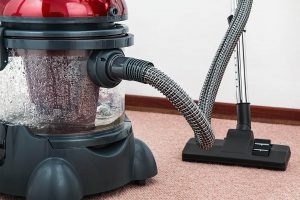
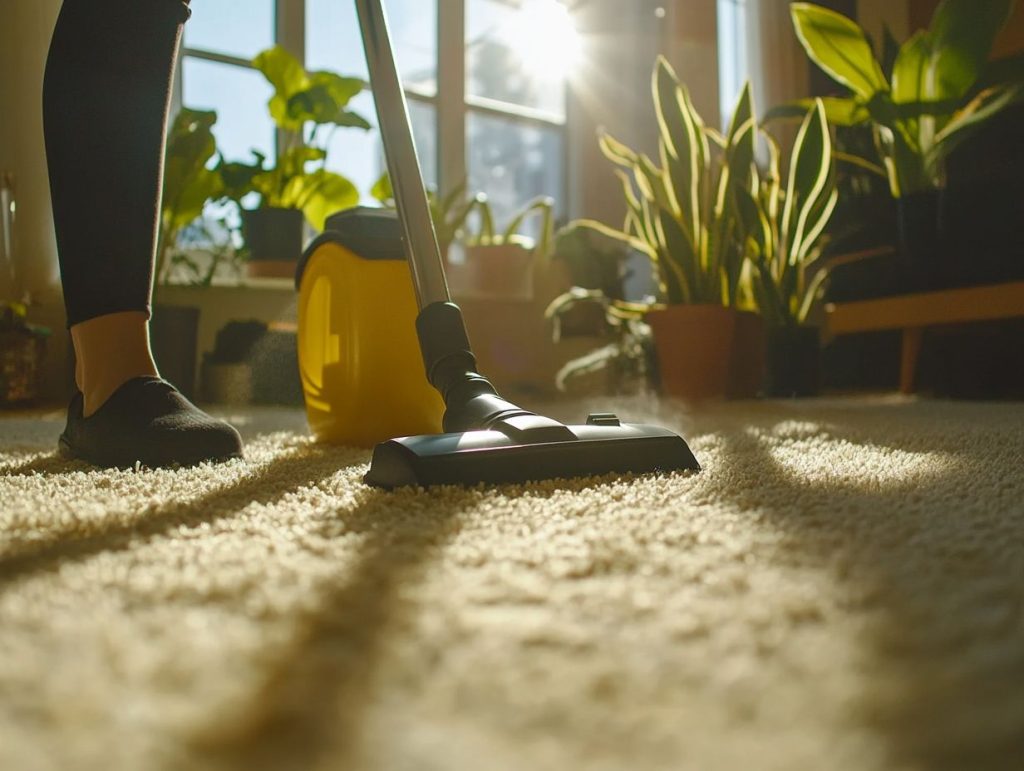
A person vacuum cleaning a carpet at home

The Importance of Indoor Air Quality

Indoor air quality is extremely important for keeping your home healthy and comfortable because it significantly affects your well-being. If the air quality is poor, you could experience various health issues, including respiratory and allergy symptoms. It is essential to address this concern directly.

Factors such as humidity control, proper ventilation, and keeping indoor pollutants at bay can significantly affect the air you breathe. By focusing on air quality, you are not just enhancing your living space but also improving your overall health—especially for sensitive individuals like children and anyone with pre-existing conditions.

Understanding the Impact of Poor Air Quality

Poor indoor air quality can really affect your health, especially your respiratory system and overall comfort at home. The effects can be widespread, from pesky allergens like dust mites and pet dander to more serious pollutants. It might worsen any existing respiratory issues or even trigger new allergy symptoms.

For example, recent studies show that over 50 million people in the UK deal with allergies, and many link their symptoms to the not-so-great air quality in their homes. One person even shared their tale of constant sneezing and itchy eyes, only to discover that the mould hiding in their basement was the sneaky villain behind it all.

Then there are those pollutants like volatile organic compounds (VOCs) from household cleaners that can linger in the air, leaving you with headaches and dizziness. Moreover, children are especially at risk since environmental factors play a significant role in asthma cases. This underscores the importance of tackling this silent threat lurking in everyday living spaces.

How Carpets Affect Indoor Air Quality

Your carpets do a lot when it comes to the air quality in your home. They often act like little reservoirs for allergens and pollutants. Think about it: carpets can trap dust mites, pet hair, and other allergens, which can interfere with the air you breathe and make it harder to keep your living space healthy.

Proper carpet maintenance is essential to tackle this. Regular vacuuming and deep cleaning will help minimise those pesky issues and improve the air quality circulating in your home.

Common Contaminants Found in Carpets

Common contaminants in carpets can affect your health and contribute to poor indoor air quality. Dust mites, pet dander, and pesky odours from bacteria and mildew can all settle into carpet fibres, leading to unpleasant smells and potential allergic reactions.

These unwelcome guests thrive in many homes’ warm, humid conditions, especially in soft furnishings that trap moisture and organic matter. Furthermore, those volatile organic compounds (VOCs) released from carpet materials or cleaning products can exacerbate respiratory issues, particularly for anyone suffering from asthma or sensitivities.

Even something as innocent as lounging on the carpet or allowing your children to play on the floor can stir up those particles, sending them airborne and increasing your exposure. Regular vacuuming and professional cleaning should be on your to-do list.

They are essential steps to help create a healthier living environment for everyone in your home.

The Role of Regular Carpet Maintenance

Regular carpet maintenance is key to keeping your carpets in great shape and ensuring healthier air quality. You can significantly reduce allergens and pollutants trapped in those carpet fibres by adhering to a maintenance schedule that includes frequent vacuuming, surface cleaning, and the occasional deep clean.

This proactive approach not only helps your carpets last longer but also creates a more inviting home environment free from unpleasant odours and potential health risks.

Benefits of Keeping Carpets Clean

Keeping your carpets clean is a game-changer for your health, especially regarding allergy relief and boosting overall household hygiene. Regular cleaning—think dirt removal and eco-friendly products—can help ease those allergy symptoms and improve the air quality you breathe at home.

But it doesn’t stop there! Clean carpets can seriously reduce dust mites and bacteria that love to hang out in messy fibres. Sticking to a solid cleaning routine is a must if you have pets or young children.

Simple things like vacuuming a few times a week and using carpet protectors can keep dirt from piling up and even extend the life of your carpets. And don’t forget about scheduling professional deep cleaning now and then to tackle stubborn stains and odours, making sure your living space stays inviting and healthy.

By caring for your carpets, you’re not only keeping things looking good but also creating a healthier indoor environment for everyone in your home.

Effective Carpet Cleaning Methods

Effective carpet cleaning methods are key to keeping your home fresh and healthy, and you have plenty of options.

Whether you go for DIY methods like spot cleaning with eco-friendly products or professional services that use steam cleaning techniques, knowing what is available can make a difference in how your carpets look and the quality of your indoor air.

Best Practices for Maintaining Clean Carpets

Adopting best practices for keeping carpets clean is crucial for their longevity and boosting indoor air quality. Regular cleaning, effective surface techniques, and smart carpet protection strategies will help prevent dirt from accumulating and extend the life of your carpets.

Consider establishing a solid cleaning schedule, vacuuming at least once a week to remove surface dust and debris. Increasing that frequency can pay off if you have pets or experience high foot traffic.

Remember to spot clean immediately after spills—this can prevent stains from setting in. Using rugs in high-traffic areas is also a great way to protect the carpet underneath.

Consider investing in a professional deep clean every 12 to 18 months to tackle embedded dirt and allergens. Applying protective treatments can help fend off future stains, keeping your carpets looking fresh and vibrant.

Additional Tips for Improving Indoor Air Quality

Improving indoor air quality isn’t just about cleaning your carpets. It’s about taking a multi-faceted approach.

Consider adding air purification systems, ensuring your home has adequate ventilation, and keeping moisture levels in check. These steps enhance the air quality in your space.

Plus, don’t forget about indoor plants—they’re like natural air filters that can help create a healthier living environment.

Other Factors to Consider

When you’re looking to improve indoor air quality, consider various factors like heating and ventilation systems, air quality testing, and even those sneaky carbon dioxide levels. Proper temperature regulation and environmental safety are essential to making your home a cosy and healthy place.

Regular maintenance of your heating and ventilation systems is key to keeping the airflow efficient and reducing pollutants. Plus, air quality testing can help you spot harmful particulate matter, which, mixed with high carbon dioxide levels, can make things uncomfortable and affect your thinking.

Investing in air purifiers and ensuring good ventilation can really boost indoor air quality. By adopting these measures, you’re not just making your living space more enjoyable; you’re also creating a healthier atmosphere that protects your well-being for the long term.

Can Carpets Make Kids Sick? The Importance of Regular Carpet Cleaning

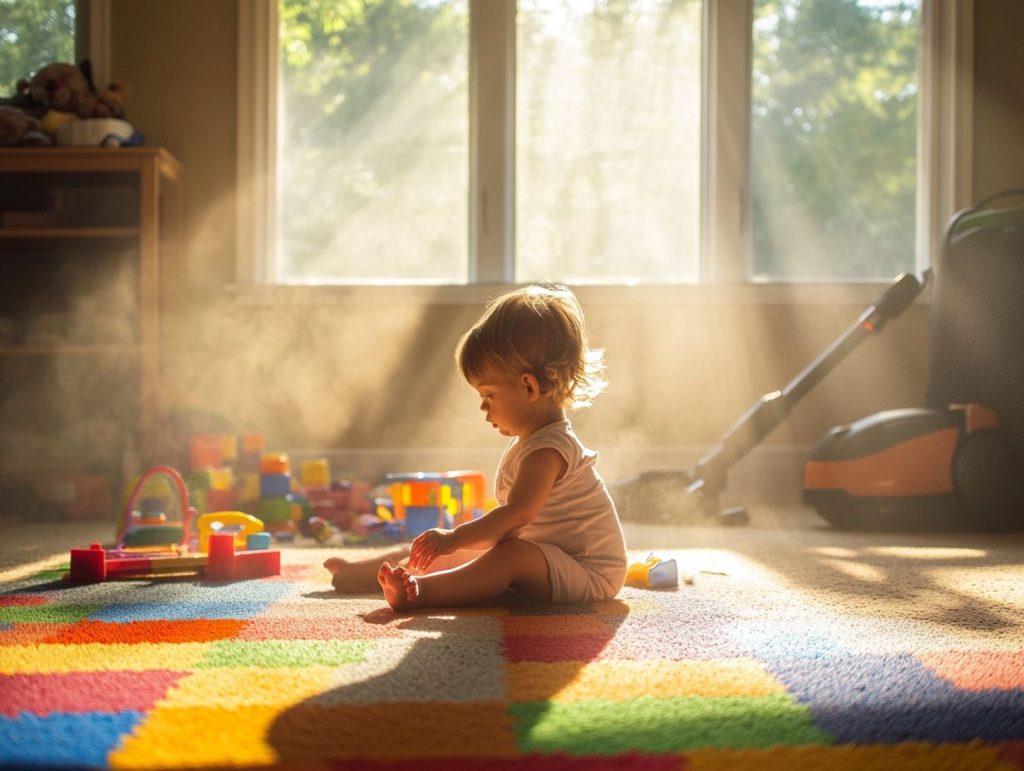
Carpets can be cosy and inviting but may also harbour hidden health risks, especially for young children. Toddlers love to crawl around and play on the floor, unaware of the jungle of microparticles beneath their feet. As a parent myself, I know how important it is to keep the carpets fresh and allergen-free – so the frequency of vacuuming and deep-clean washing must increase, compared to a household without children.

DIY Cleaning Tips and Tricks

The Impact of Carpets on Children’s Health

Carpets can impact your child’s health, especially in indoor play and learning spaces. Of course, they bring warmth and comfort, but they can also trap allergens, dust mites, and other pollutants that might interfere with your child’s respiratory health.

If your child suffers from asthma or allergies, irritants lingering in the carpet fibres can exacerbate the situation. That’s why it’s so crucial for parents to be aware of the potential health risks that carpets can pose in their homes.

Regular maintenance and choosing the right types of carpets can help create a safer environment for children.

Common Health Issues Linked to Dirty Carpets

Dirty carpets can be more than just an eyesore; they’re often linked to various health issues, especially for children susceptible to allergens and pollutants. When carpets aren’t kept in check, they can trap particles that could lead to respiratory problems, such as asthma and allergies. Suppose your children are playing on those carpets. In that case, they might experience discomfort, irritation, or even heightened sensitivity to everyday irritants lurking in the dust and dirt that build up in the fibres. You need to understand these risks to keep your home healthy.

Research shows that indoor air quality can suffer when carpets are dirty. They can be a breeding ground for dust mites, pet dander, mould spores, and other unpleasant contaminants. A study by the American Lung Association pointed out a strong link between high allergen levels in homes and increased respiratory issues in children.

To tackle these risks, make it a habit to vacuum regularly with HEPA filters, schedule professional deep cleanings, and ensure your home is well-ventilated. Eliminating these potential hazards can create a healthier space, allowing your little ones to thrive in a safer environment.

How Regular Carpet Cleaning Can Help

Regular carpet cleaning is essential for keeping your home environment healthy, especially if you have children running around. Carpets tend to trap allergens, dust mites, and all sorts of contaminants, which can affect indoor air quality and pose health risks, particularly for anyone with respiratory issues.

You can significantly reduce these irritants by adhering to a consistent cleaning routine—mixing professional cleaning with your own DIY methods. Furthermore, using eco-friendly cleaners and steam cleaning techniques can enhance the hygiene of your carpets, ensuring they remain a haven for your little ones to play and grow.

Benefits of Professional Cleaning

Professional cleaning has many benefits that can seriously enhance the health and safety of your home, especially if you have children running around. Unlike just your usual vacuuming, professional techniques like deep cleaning and steam cleaning delve in to remove all that deep-seated dirt, allergens, and toxins trapped in your carpet fibres. This improves indoor air quality and addresses the health risks associated with dirty carpets, helping protect your family’s respiratory health in the long run. Regular professional cleaning is a wise move for keeping your home a healthy space for your little ones.

These services use top-quality equipment and specialised cleaning solutions to tackle grime and allergens that regular cleaning often overlooks. Furthermore, the professionals have plenty of experience, so they ensure your home isn’t just looking clean but is hygienically safe. This benefits sensitised families, as expert cleaning reduces dust mites, pet dander, and mould.

You can create a nice synergy that complements your regular cleaning routine by scheduling periodic deep cleaning sessions. This enhances overall sanitation while extending the life of your home furnishings. Essentially, investing in professional cleaning transforms your home into a cosy sanctuary of health and comfort.

DIY Cleaning Tips and Tricks

DIY cleaning can be a clever and budget-friendly way to keep your carpets in pristine condition and ensure a healthy environment for your children. With simple techniques and eco-friendly cleaners, you can tackle those pesky stains, smells, and allergens that accumulate over time.

By mixing natural ingredients like vinegar and bicarbonate of soda, you can whip up powerful stain-removing solutions that are gentle on your carpets and the planet. Regular vacuuming—especially with a HEPA filter—can dramatically reduce dust mites and other irritants, helping to improve your home’s air quality. Do not forget to spot-treat spills immediately; that can save you from dealing with permanent stains and protect your investment.

With consistency and these straightforward methods, your carpets can be cleaner and healthier, contributing to your family’s overall well-being.

Preventing Carpet-Related Illnesses

You must focus on preventing carpet-related illnesses to protect your children’s health and create a safe home environment. Adopting some simple preventive measures and setting up effective cleaning routines can reduce the risk of exposure to allergens, dust mites, and other annoying health hazards lurking in your carpets.

Regular maintenance, surface cleaning, and using the right cleaning products can help keep those carpets free from contaminants that might trigger allergic reactions or respiratory issues in your children. Taking these steps improves your home’s hygiene and promotes better health and comfort for your family.

Preventive Measures for a Healthy Home

Implementing preventive measures is key to maintaining a healthy home and reducing the risk of illness linked to dirty carpets. By following health guidelines and establishing a regular cleaning schedule, you can effectively manage allergens and pollutants in your indoor space.

Some practical strategies include:

  • Monitoring indoor humidity levels
  • Ensuring there is adequate ventilation
  • Using the appropriate cleaning products to minimise chemical exposure

These proactive steps will help you create a safer living environment for your children, promoting their health and well-being.

Along with your regular cleaning routines, it is a good idea to schedule deep cleaning sessions at least every few months to tackle the built-up dust and allergens hiding in carpets and upholstery. Using a dehumidifier in damp areas can also be transformative, helping to keep moisture levels in check and preventing mould growth—a notorious allergen.

For cleaning supplies, choose fragrance-free, non-toxic, effective, yet gentle products that do not irritate sensitive lungs. Encourage your children to play in well-ventilated areas and wash their bedding regularly to minimise further exposure to potential irritants. By being mindful of these practices, you can significantly enhance your indoor air quality.

Choosing the Right Carpet for Your Family

Choosing the right carpet for your family means considering a few important things, especially when it comes to the health and safety of your children. With so many types of carpet available, such as natural fibres and synthetic options, each has quirks that can affect indoor air quality and safety.

You will want to select carpets that focus on cleanliness and durability. Don’t forget about the right underlay! This can help you create a child-friendly space that reduces exposure to allergens and irritants.

Understanding these factors is essential for choosing wisely when installing your new carpet.

Factors to Consider for a Safe and Clean Carpet

When selecting a carpet for your home, a few key factors matter for keeping your family safe and your home clean. From installation to ongoing maintenance, understanding these elements will help you make choices that promote hygiene and reduce health risks.

First, take a good look at the carpet’s material. Some fibres can trap allergens and dust, affecting air quality. Then there’s stain resistance to consider—let’s be honest, spills and accidents are bound to happen, especially if you have children running about.

Establishing a regular maintenance routine is a game-changer. Make it a habit to hoover at least once a week and schedule a professional deep clean every six months. This can help to keep dust mites and bacteria at bay. Plus, choosing eco-friendly and non-toxic cleaning products can provide extra protection for your household, ensuring your indoor space is stylish and a healthy environment for your children.

Best Recipe For Carpet Cleaning

Carpets can be cleaned in many ways – indoors, outdoors, in rivers (in some countries, as strange as it sounds). And there are various cleaning agents to clean them with. Let me tell you what the best way is. And it can be done only with basic home supplies.

Doing It The Natural Way

Now, every self-respecting homeowner should have this three standard yet powerful products – vinegar, household ammonia and dishwashing liquid (or dish soap). Vinegar is one of the most versatile items in your kitchen cover. If you have a bottle of vinegar at home, you won’t need to buy a chrome cleaner, a shower door cleaner, or a toilet bowl cleaner. Not to mention many other clever uses that are too numerous to talk about. Simple household ammonia is one of the most effective cleaners for making oven cleaning a snap, from removing burnt-on build-up from your barbecue grill to non-streak window cleaning. If you can deal with its strong smell, it’s a good friend to have around.

And last but not least – ordinary dish soap, a product that most people think is just for washing dishes. Oh, no. Just as its latrine and grease-cutting ability clean dirt off dishes, that same restroom, combined with toothpaste, can instantly remove strong fish odour from your hands. And when it’s added to household bleach, it will make those grimy white patio chairs a breeze. But when it’s combined with vinegar and household ammonia, is when it shines (no pun intended).

The Recipe for Clean Carpets

Combining these three products produces one of the most brilliant and fabulous homemade carpet cleaners anyone has ever seen. Here’s the recipe:

  1. Put three tablespoons of dish soap into a container the size of a tiny bucket, then add about a teaspoon of white vinegar, then pour in about a half teaspoon of household ammonia. It is best to do this part in a well-ventilated area because the ammonia smell can be overwhelming, but believe me – that’s well worth any temporary discomfort.
  2. Once you’ve done that, add about three-quarters of a cup of water.
  3. Then, mix it up and pour it delicately into a transparent foam container. I find this container to be handy. You can find these containers in many stores and most pharmacies. They hold various products that need to be suspense in a foam.
  4. Now that we’ve got our mix finished and “canned”, we apply the foam on the carpet, then take a sponge and rub the rug a little.

And voila! No more dirty spots; your carpet will light up like a Christmas tree. Use this recipe on your upholstery, but remember – use only the foam, not the liquid!

Do Not Tolerate Mould On Your Carpet

Today, we are going to talk about mould (or mildew, whichever way you prefer) and why you should address it immediately after you see it. I know it is not a particularly sexy topic, but most people underestimate mildew because they do not have enough knowledge about it. After all, how dangerous could the small brownish spots in the corner be? 

What Is Mould? 

Let’s start by saying that there are multiple different types of mould. They are all fungi, however, and proliferate quickly if they find the proper habitat. The difference between mould and the regular types of fungi is that the former grows in the form of multicellular filaments called hyphae, while the latter evolve as a single-cell organism.

Why is this important? Because it explains why mildew is so tricky to remove and may require much greater effort and skill. If it were a single-cell organism, it would be elementary to deal with. The fact that it can spread exponentially from a small core and can survive even if you remove the core makes it a tough opponent to beat. 

Domestic Mildew: Is It Inevitable?

What mildew needs, above all else, is moisture. So there is your first step in pre-empting the problem before it appears – reduces the levels of humidity at home. A properly working air conditioner with an in-built bacterial filter will help you keep the relative air humidity below 60% – the advised optimal limit. 

Mould loves natural materials – and most of all, wood and fibres. If there is a lot of carpentry in your home, applying protective polish to its surface is a must. You may not like the following advice, but if you spot mildew on a wooden piece of furniture, you should seriously consider removing it from your home right away. 

Bottomline – mould is by no means inevitable, and since it is so visible, you have the chance to address it before it becomes a tiresome issue.

Mould On The Carpet – React Immediately

Let’s recap what we have said so far:

  • Mould is multicellular and once formed, develops rapidly if it finds the proper habitat.
  • It needs moisture to grow.
  • It loves natural materials – and most of all, wood and natural fibres.

These three points alone should convince you that if you live in a humid city like London and have carpeted floors, the danger lurks around the corner. The first signs of mildew are not that hard to find, and you cannot mistake it for anything else – tiny brown, greyish or greenish spots that usually appear near the corner of the room. They will be slimy and unpleasant to touch and emit a heavy bog-like smell. 

I know what you are going to say – alright, it sounds nasty enough, but wouldn’t a quick wash fix the problem? And why should I panic for something so tiny and unimportant? Let’s start with the second question – you definitely should not panic, but don’t take the issue lightly either. What most people don’t understand is that the mould cells actually feed off the carpet fibre – they can corrode it to the point of irreparable damage. And I do not mean to freak you out, but the process can take much less time than you imagine. In other words, even if you thoroughly remove the nasty fungi, there will not be much of a carpet fibre left in the affected area. 

But that’s not even the worst of it. Some types of mould produce biotoxins that can be dangerous for your health. Their spores are light and transmit easily in the air. If you inhale them continuously and in large quantities, they can provoke respiratory and neurological problems, and even cause death.

We want a bit too bleak, didn’t we? So let’s get back to the brighter side of life. Unlike some other of the most common domestic allergens – dust mites or bacteria, for example – mould is not invisible. It is up to you, therefore, to react quickly and remove it before it becomes a problem. Which brings me to the final point I want to make.

How To Effectively Remove Mould From Your Carpet? 

I have read dozens of Internet articles on the best ways to remove mildew or the most powerful natural agents that destroy it. I will not apologise for what I am about to say – the people who write them are either frauds or stupid. Tips like “sprinkle the mould spot with baking soda, wait for fifteen minutes and then vacuum” make me want to sprinkle the person who wrote this with baking soda and see what happens. These people obviously do not understand what mould is – if you remove it from the carpet surface, there is no guarantee that part of the fungi will not remain below, in which case the problem will reappear in a few days.

So what is the alternative? What every professional carpet cleaner would tell you – hot water extraction. It is the most common method to deep-clean a carpet, and it remains to this day the most effective one. The combination of injected steam and a powerful biodegradable cleaning agent leaves the mildew no chance of survival. It removes it thoroughly down to the carpet pad, along with all the other nasty microorganisms that lurk in the shadows.

To sum it all up – mould is neither a reason for panic nor a tiny nuisance you can postpone forever. The quicker you deal with it, the less damage it will do. At the first signs of mildew spots, do not get to your browser to look for handy tips – instead, call a professional carpet cleaner and let them tackle the problem.

Valuable Clean Tips for Incredible Carpet Beauty

The dust can enter dwellings no matter if your home is completely closed during holidays, travelling, etc. So the struggle with the dust is always dynamic and endless. Regular carpet care ensures a healthy atmosphere indoors, and it is essential to vacuum once or twice a week to improve the air condition.

Clean carpets can absorb harmful pieces in the air and keep them in, protecting the environment, so their frequent washing is among the must-do chores at home.
The truth is that we can’t imagine what the amount of the bacteria and grime contained in poorly maintained carpets and rugs is, and how much that can impact our lives and wellbeing.

Professional stain and harmful bacteria removal are superior to the DIY alternatives we know. In most cases, when we see how spots and spills disappear, feelings of satisfaction and calmness can permeate us. Regular washing is quite necessary, vacuuming is obligatory, but unfortunately, the frequently applied carpet care is not always efficient and enough.
Most people believe that vacuum cleaning is one of the most appropriate ways of dust and grime removal. That is not the case. According to researches and tests, the suction method eliminates the bacteria from the top of the pile. Dust, bacteria and grime can land on the fibres’ base very quickly; spread and develop there although our efforts to ensure perfectly cleansed carpeting. We might not notice everything around our space and mostly what occurs among the fibres. Still, experts recommend professional carpet cleaning at least once a year because in that way you can avoid allergic complaints and respiratory diseases.

Besides, you can refresh textile coverings at home not only through vacuuming but with steam cleaning and baking soda. Some materials can smell from the bottom half of the fibres, and such treatment can penetrate deeply to replace the unpleasant stains. If you can’t manage to take out the awful smell, professional support can help you. Find a reliable company and trust the expert’s advice. That is extremely important when you have pets at home.
When it comes to spot treatment, first of all, consider the type of material you have and find what kind of ingredients would be suitable for it. One more note-take the special cleaning instructions into consideration to be sure you won’t damage the threads.
It is necessary to check the effect of the cleaning over a hidden part of the carpet and never to rely on the assumption that everything would be ok and you haven’t got enough time for tests. Hurry up clever.
It would be best to keep in mind that the significant effect is always in the details. Be calm, positive and patient enough to cope successfully with grime and spot challenges on your favourite carpet or rug.
Remember that a small quantity of the cleaning product is sufficient, creamy foam is not recommended, because rinsing would be a challenging and demanding process. Leaving a cleaner in the fibres is a big problem for the textile state and its ability to absorb the dust and particles immediately after cleaning. Besides, mould is waiting behind the corner and wetness after the washing could bring you only problems. So, in conclusion, use as little product as possible during the carpet purifying.
Another extremely essential detail – it’s better never to scrub and rub, forget the rough movements. Gentle attitude is required, patting and blotting motions only. Simply that would be perfect.
Despite our desire for great cleanliness and hard-work on that goal, reading and informing, there are stains and spill incidents which are stubborn and cannot be removed in any way.
Sometimes, only a professional cleaning company with specific equipment, products and methods can guarantee that the deep clean would be thorough and perfect, eliminating every spot and trace.
Coffee stains are among the most frequent types of contaminations, especially early in the mornings when we are still sleepy. Spray a little bit of hydrogen peroxide over the problem zones. Soak a towel in warm water, then, let it sit over the stained area. Placing heat over it can help to get rid of the colouration. You can make it through a steam cleaner or with the steam iron. Both methods would be suitable enough, think about what is more convenient for you. At the end blot the humidity with a clean and dry cloth.
Use hydrogen peroxide for bloodstains, red wine rings or spills, but always make a test over invisible part of the carpet, because it acts like bleach.
Dirt, grime, dust, mud and other marks on your carpets and rugs are a significant pain for every housemaker. The good news is that we always have different choices, clean green options, modern methods and the possibility to find responsible professional support. For the perfect carpet appearance and deep cleanliness, an expert’s help would be good for the housekeeping environment once a year.